Nov 16
What Is an AI Data Agent?

An AI data agent is software that connects to business data, watches the metrics that matter, investigates when something changes, and delivers the finding to the people who need it, without waiting for someone to ask. Where a dashboard waits to be checked, a data agent does the checking. Squadbase builds dashboards and runs agents that monitor and report automatically on top of them, so every finding can be traced back to the underlying numbers.
This guide covers how AI data agents work, how they differ from chatbots and BI dashboards, real examples by team, how to tell a genuine agent from a relabeled chatbot, and where agents are a poor fit.
What is an AI data agent?
An AI data agent is a specialized AI agent built for data work. It combines three things that used to live in separate tools:
- Access to data. Live connections to warehouses, databases, spreadsheets, and business apps such as Snowflake, BigQuery, PostgreSQL, Google Sheets, Google Analytics, and Salesforce.
- Business context. Agreed definitions for metrics like revenue, active customers, or churn, so the agent calculates numbers the same way every time.
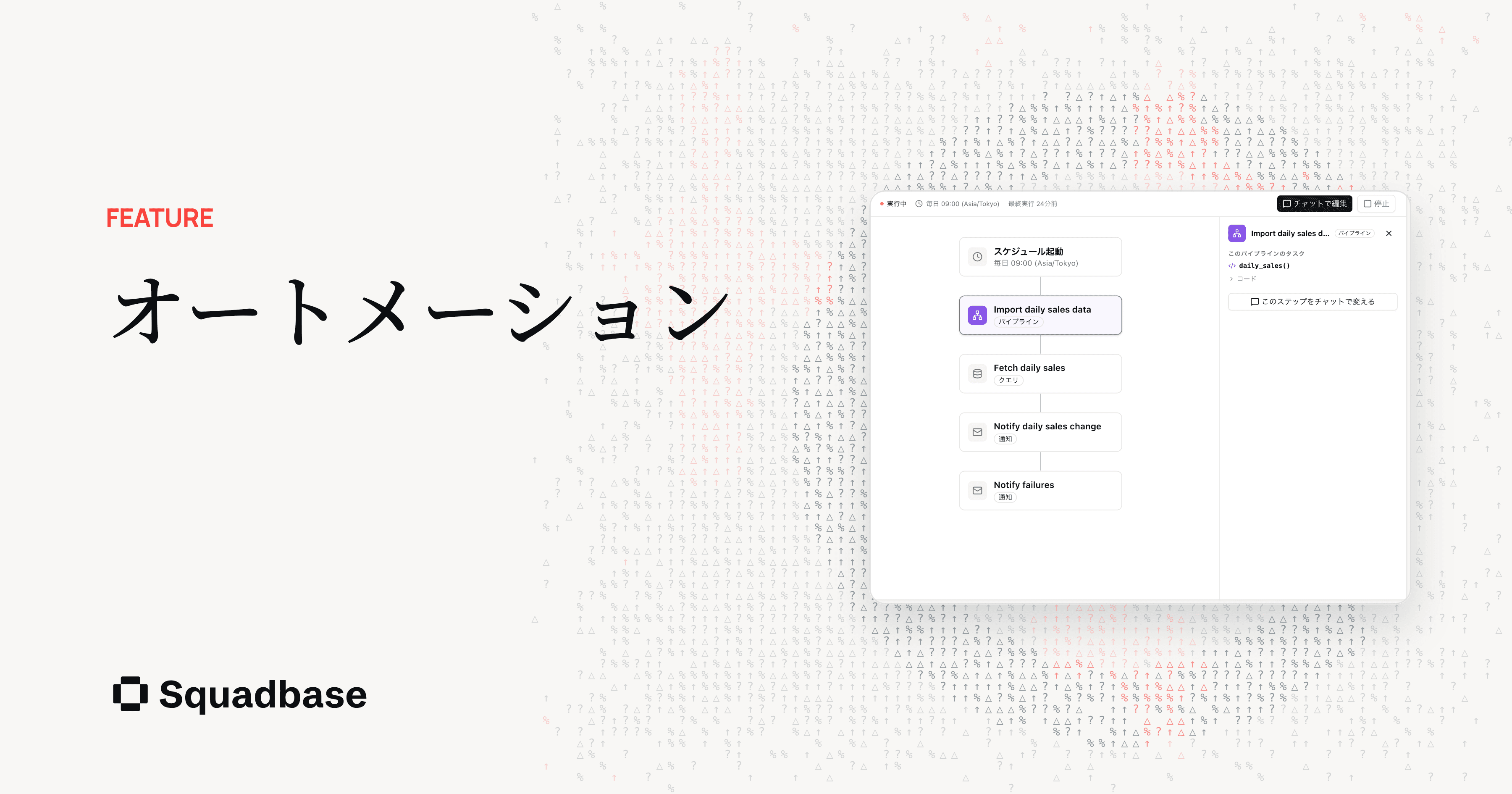
- Autonomy within limits. The ability to run on a schedule or trigger, decide which follow up questions to ask, and choose what is worth reporting.
The easiest way to picture it: a junior analyst who never sleeps, checks every metric every morning, and only speaks up when something is worth a meeting.
AI data agent vs AI agent
"AI agent" is the broad category. It covers any system that uses a language model to pursue a goal, call tools, and act. A coding agent writes software. A customer service agent answers tickets. A data agent is the subset focused on measuring the business: querying data, analyzing changes, and reporting results.
That focus matters. A general agent can draft an email about last week's revenue, but it needs a reliable source for the revenue figure. The data agent is that source. It grounds the answer in governed data rather than in what a language model guesses.
How does an AI data agent work?
Most AI data agents follow the same loop, whether they run once a day or every hour.
1. Connect
The agent connects to the sources where the business already keeps its data. A good agent reads data where it lives. It does not require a migration into a new warehouse or a proprietary format.
2. Understand
Before it can analyze anything, the agent needs to know what the numbers mean. Is "revenue" gross or net? Does "active user" mean logged in this week or this month? Strong platforms store these definitions as tested code or a semantic layer, so the agent never improvises a formula.
3. Watch
On a schedule (daily, weekly, monthly) or when a threshold is crossed, the agent pulls fresh numbers and compares them to the expected range. This is the step dashboards skip: a dashboard shows the number, but nobody is assigned to look at it at 7 a.m. on a Monday.
4. Investigate
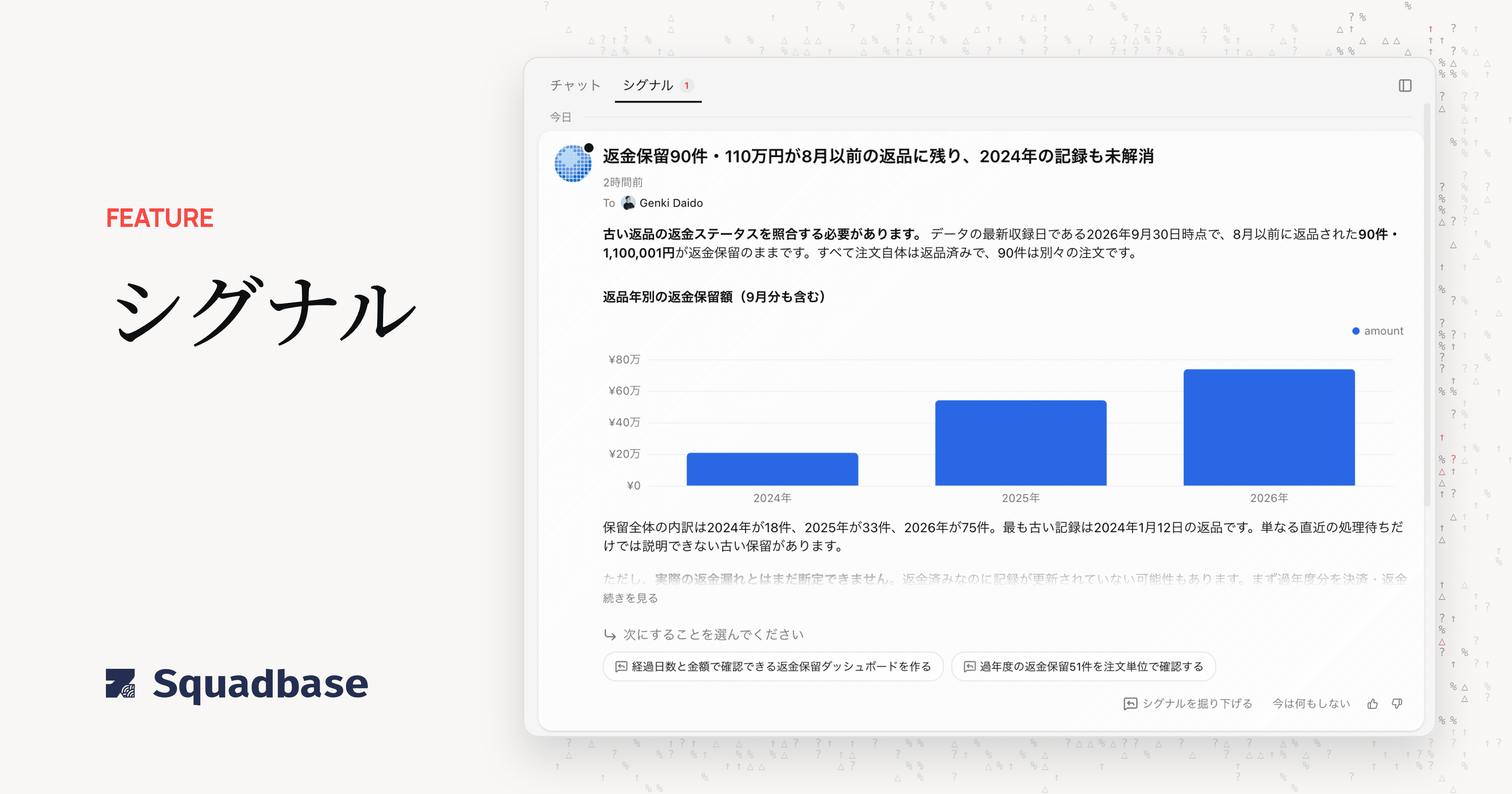
When a metric moves, the agent does not stop at "revenue is down 8%." It breaks the change down by region, product, channel, and customer segment until it finds where the drop is concentrated. This is the work an analyst would normally spend an afternoon on.
5. Deliver
The agent writes a short summary in plain language and sends it where the team already works, usually Slack or email. The best reports link straight to the dashboard behind the finding, so a reader can check the rows in one click.
6. Improve
Over time, the team tunes what the agent watches, adjusts thresholds that fire too often, and adds new metrics. Some platforms learn from feedback automatically. Others rely on people editing the agent's instructions. Either way, the agent gets more useful as it is used.
AI data agent vs chatbot vs dashboard vs report
The term "data agent" gets used loosely. This comparison shows what each tool is expected to do and where an agent adds something new.
| Tool | Who starts the work | What it produces | Main limitation |
|---|---|---|---|
| Static report | An analyst, on a schedule | A fixed file or slide deck | Stale the moment it ships; no follow up |
| BI dashboard | The viewer, when they remember to look | Live charts | Waits to be checked; does not explain changes |
| Chat with data (AI assistant) | The user, by typing a question | An answer or chart | Only answers questions someone thought to ask |
| AI data agent | The agent, on a schedule or trigger | A finding, its cause, and a link to the evidence | Needs clean data and clear metric definitions |
The key shift is who starts the work. Dashboards and chat tools are pull based: a person has to ask. Agents are push based: the system raises what matters. Squadbase covers this shift in more depth in when data speaks first.
For a wider view of how this changes the BI stack, see rise of the data workspace.
A worked example: the Monday revenue drop
Definitions only go so far. Here is what one cycle of a weekly revenue agent looks like from start to finish.
Setup (once). A head of sales asks for a weekly agent that watches net revenue, pipeline created, and win rate. Revenue is defined as closed won deal value minus refunds, pulled from Salesforce and Stripe. The agent runs every Monday at 7 a.m. and posts to the sales leadership Slack channel.
Monday, 7:00 a.m. The agent pulls last week's numbers. Net revenue is $412,000, 11% below the trailing four week average. That is outside the normal range, so the agent investigates.
7:01 a.m. The agent breaks revenue down by region. North America and Asia Pacific are flat. Europe is down 34%. It breaks Europe down by segment. Mid market deals are on track. Enterprise deals are down sharply.
7:02 a.m. The agent checks the pipeline. Three enterprise deals in Germany that were forecast to close last week slipped to "next quarter" on Thursday. All three list the same competitor in the loss reason field.
7:03 a.m. The agent posts a summary:
Net revenue last week: $412K, down 11% vs the 4 week average. The drop is concentrated in European enterprise (down 34%). Three German enterprise deals slipped on Thursday, all citing the same competitor. Pipeline created and win rate elsewhere are within normal range. [Open dashboard]
8:30 a.m. The sales leader opens the dashboard link, confirms the three deals at the row level, and adds a competitive review to the weekly meeting agenda.
Without the agent, the same insight would have surfaced Wednesday at the earliest, after someone exported data, built a pivot table, and asked the regional team. With the agent, it took three minutes of compute and zero analyst hours. The numbers in this example are illustrative, but the workflow matches how recurring report agents run in production today.
Real examples of AI data agents by team
The highest value agents handle work that is recurring, rules based enough to define, and painful enough that it often gets skipped.
Sales
- Weekly pipeline and revenue summary with root cause for any variance
- Alerts when a large deal stalls or a forecast category changes
- Rep level activity checks before one on ones
Marketing
- Monthly GA4 and ad platform reporting, with notes on which channel moved and why
- Daily spend pacing alerts when a campaign overspends
- Conversion rate monitoring by landing page after site changes
Finance and operations
- Daily cash and receivables snapshot
- Expense anomaly checks, such as duplicate payments or unusual vendor spikes
- Inventory alerts for slow moving or out of stock items
Leadership and founders
- A single Monday briefing that pulls the five numbers the company runs on
- Board metric tracking with automatic month over month commentary
Industry example: golf course management
Squadbase and Grain, the company behind the golf operations platform Grain Cloud, built a packaged agent that sends golf course owners a daily report. It benchmarks nearby courses to help set pricing and supports management across groups of courses. It is a good example of an agent that does one recurring job extremely well, rather than a general assistant that tries to do everything.
How to spot a real AI data agent
Gartner warned in June 2025 that many vendors are "agent washing," rebranding assistants, chatbots, and automation tools as agentic AI. It estimated that only about 130 of the thousands of vendors claiming agentic AI offer real agentic capabilities. Before buying, check for these six signs.
- It runs without a prompt. If nothing happens until someone types a question, it is a chat assistant, not an agent.
- It investigates, not just alerts. A threshold alert says "revenue is down." An agent says where, by how much, and the likely cause.
- It uses fixed metric definitions. Ask the vendor how "revenue" is calculated and where that logic lives. If the answer is "the model figures it out," expect inconsistent numbers.
- Every finding links to evidence. Look for a path from the summary to the chart to the underlying rows. No path means no way to catch an error.
- It works with existing data. An agent that requires moving everything into the vendor's own store adds a migration project to the purchase.
- It has security basics. Role based access, audit logs, encryption in transit and at rest, a clear policy that business data is not used to train models, and an independent attestation such as SOC 2.
Limits: when an AI data agent is a poor fit
Agents are not the right answer for every data problem. Gartner predicts that over 40% of agentic AI projects will be canceled by the end of 2027, citing rising costs, unclear business value, and weak risk controls. Most of those failures come from pointing agents at the wrong job.
Messy or undefined data. If three teams calculate churn three different ways, an agent will faithfully report all three. Fix definitions first.
One off, exploratory questions. "What would happen if pricing changed by 10%?" is better handled by an analyst or a chat tool. Agents shine on repeated work.
Decisions with high stakes and no review. An agent can recommend pausing a campaign. Approving a $500,000 purchase order should stay with a person.
Very small data sets. With a few dozen rows a month, normal variation looks like an anomaly. The agent will cry wolf.
No owner for the output. An agent that posts into a channel nobody reads is a dashboard with extra steps. Every agent needs a named person who acts on its findings.
A useful rule from Gartner's guidance: use AI agents where decisions are needed, and simpler automation where the workflow is routine.
How AI data agents keep numbers trustworthy
The biggest worry about AI in analytics is a confident, wrong answer. Well built agents reduce that risk in four ways.
- Validated data up front. Data is cleaned and checked before the agent touches it, so errors are caught at the source.
- Definitions as code. Business logic is written once, tested, and reused, so the model never invents a formula on the fly.
- Self correcting loops. The agent checks its own query results and retries when something does not add up, before anything reaches a person.
- Human verification by design. Every report links to a real dashboard where a reader can drill into the rows and confirm the figure.
Squadbase agents run on top of real dashboards for exactly this reason: a reader who doubts a number is one click from the data behind it.
How to get started with an AI data agent
A first agent can go live in a week if the scope is small. This sequence works for most teams.
- Pick one recurring report. Choose a report someone builds by hand every week, such as a Monday sales summary or a monthly marketing review. Recurring business reports are the most repetitive and highest return starting point.
- Write down the metric definitions. Agree on exactly how each number is calculated. This step prevents most trust problems later.
- Connect the sources. Link the warehouse, spreadsheet, or app where the data lives. Avoid copying data into a new system if the platform can read it directly.
- Build the dashboard first. A dashboard gives the agent something to run on and gives readers a place to verify findings.
- Set the schedule and the threshold. Decide when the agent runs and how big a change is worth reporting.
- Choose the delivery channel. Send it where the owner already works, usually a Slack channel or an inbox.
- Review for two cycles. Compare the agent's output to the manual report. Adjust thresholds and wording, then retire the manual version.
Squadbase's Squadbase Agents launch post shows this flow inside the product, and scheduled reports from ingestion to delivery covers the scheduling layer in detail.
Where AI data agents are heading
Gartner predicts that at least 15% of day to day work decisions will be made autonomously through agentic AI by 2028, up from 0% in 2024, and that 33% of enterprise software applications will include agentic AI by 2028. Measurement work, the reporting, monitoring, and analysis that keeps a company informed, is one of the most natural places for that shift to start, because the inputs are structured and the outputs are easy to verify.
The broader movement has a name: agentic analytics. AI data agents are the working unit of that movement, one agent per recurring job, each tied to a dashboard a person can check.
Frequently asked questions
What is an AI data agent?
An AI data agent is software that connects to business data, monitors key metrics, investigates changes, and delivers findings automatically on a schedule or trigger. Squadbase agents run on top of real dashboards, so every finding links back to the data behind it.
How is an AI data agent different from a chatbot?
A chatbot answers questions when someone asks. An AI data agent starts the work itself: it checks metrics on a schedule, decides what is worth reporting, and explains the cause. A chatbot is pull based, while an agent is push based.
Can an AI data agent replace a data analyst?
No. An agent takes over repetitive monitoring and reporting, such as weekly summaries and anomaly checks. Analysts keep the work that needs judgment: new questions, strategy, and deciding what the business should measure in the first place.
Are AI data agents accurate?
Accuracy depends on the data and the definitions behind the agent. Agents built on validated data, fixed metric definitions written as code, and dashboards that show the underlying rows are far more reliable than agents that let a language model guess how to calculate a number.
What data sources can an AI data agent connect to?
Most agents connect to cloud warehouses (Snowflake, BigQuery), databases (PostgreSQL, MySQL), spreadsheets (Excel, Google Sheets, CSV), and business apps (Google Analytics, Salesforce, Airtable). The best platforms read data where it already lives instead of requiring a migration.
Is it safe to connect business data to an AI data agent?
It can be, if the platform has the right controls. Look for role based access, encryption in transit and at rest, full audit logs, a written policy that customer data is never used to train AI models, and an independent attestation such as SOC 2. Squadbase is SOC 2 Type I certified.